Enterprise Saas
2023
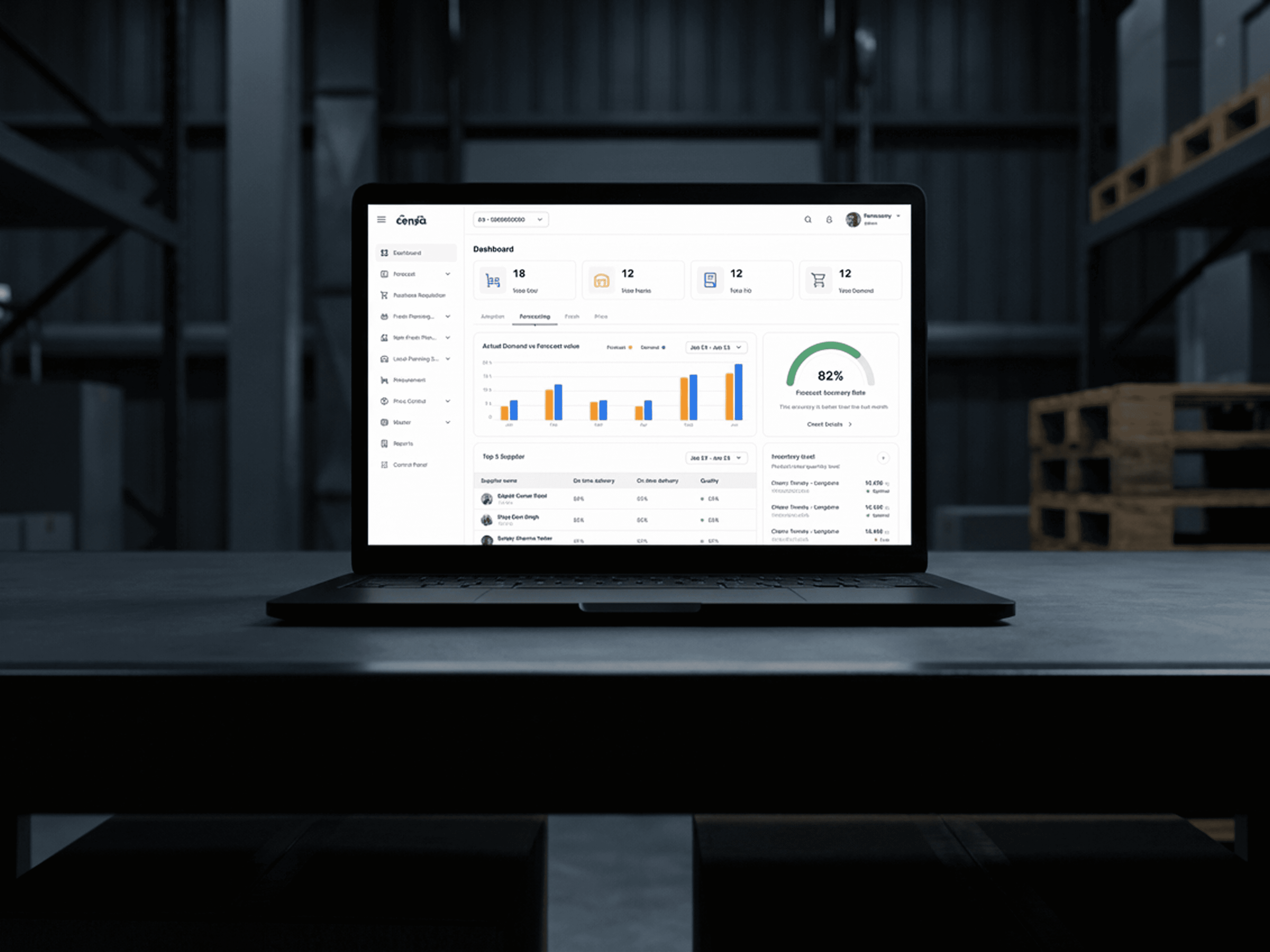
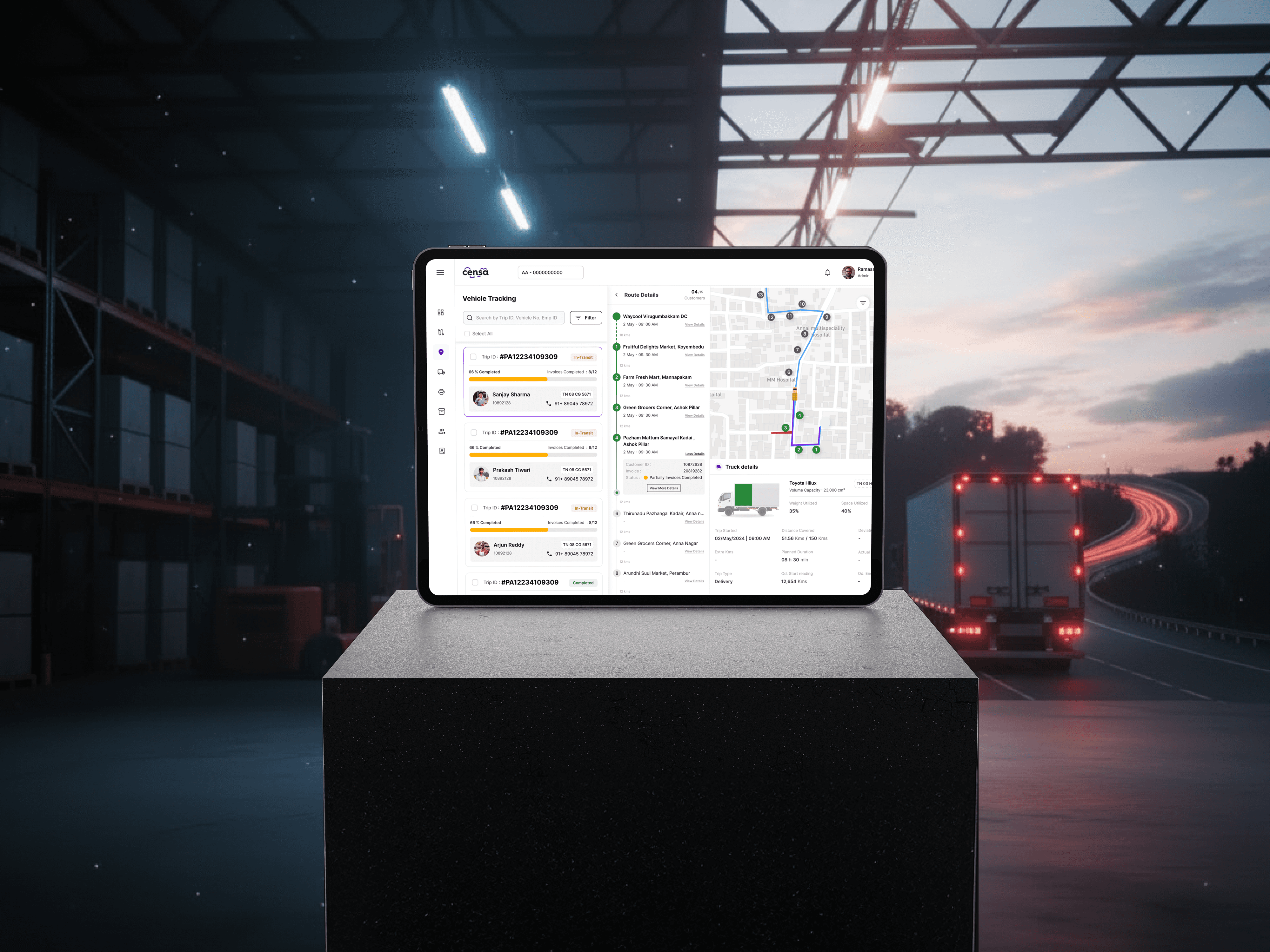
Censa Procurement Portal
Turning a WhatsApp-run procurement process into one system, across 220 screens.
Web
DasHboard
Enterprise Saas
2023
Censa Procurement Portal
Turning a WhatsApp-run procurement process into one system, across 220 screens.
Web
DasHboard
Role : Sole UI/UX Designer
Team : Solo, with product & engineering
Company : CensaNext Pvt Ltd
Timeline : Oct 2023 – Feb 2024 (~5 months)
Platform : Desktop web
Role : Sole UI/UX Designer
Team : Solo, with product & engineering
Company : CensaNext Pvt Ltd
Timeline : Oct 2023 – Feb 2024 (~5 months)
Platform : Desktop web
Project Overview
Procurement managers were tracking shortfalls, approvals, and updates over WhatsApp — because the tool built for the job didn't cover the actual job.
I redesigned the platform end to end. 220+ screens, one system, built to hold up as the product scaled across warehouses.
Project Overview
Procurement managers were tracking shortfalls, approvals, and updates over WhatsApp — because the tool built for the job didn't cover the actual job.
I redesigned the platform end to end. 220+ screens, one system, built to hold up as the product scaled across warehouses.
My Role & Responsibilities
Role : UI & UX Designer
Responsibilities : End-to-end redesign, design system alignment, interaction design, and collaboration with product and engineering teams.
I worked closely with product managers and engineers to ensure the redesign was scalable and aligned with broader platform goals.
My Role & Responsibilities
Role : UI & UX Designer
Responsibilities : End-to-end redesign, design system alignment, interaction design, and collaboration with product and engineering teams.
I worked closely with product managers and engineers to ensure the redesign was scalable and aligned with broader platform goals.
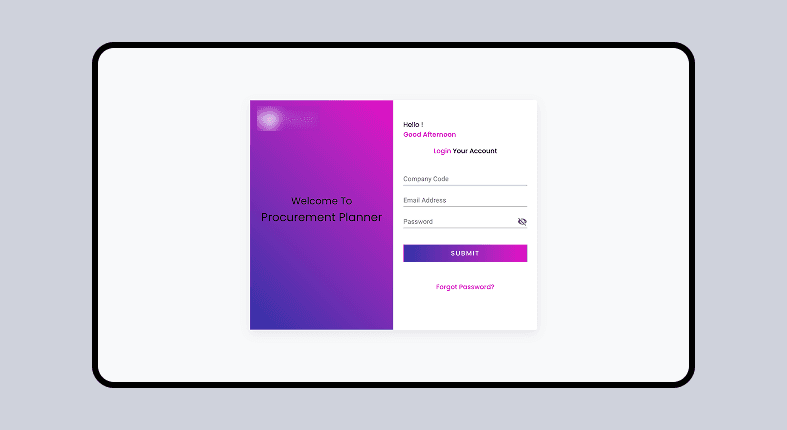
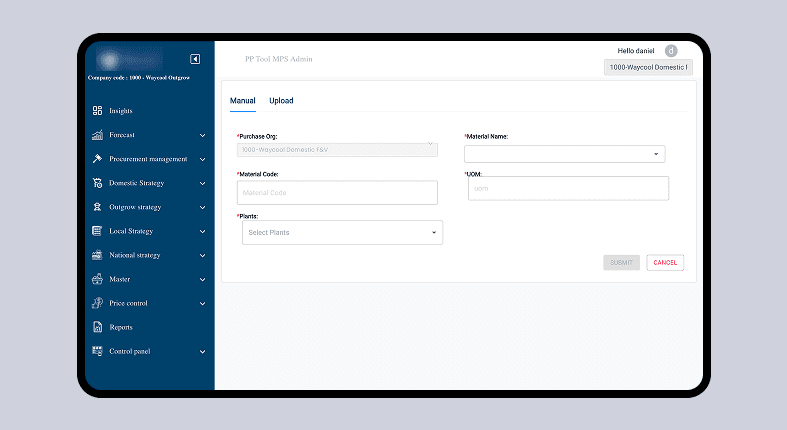
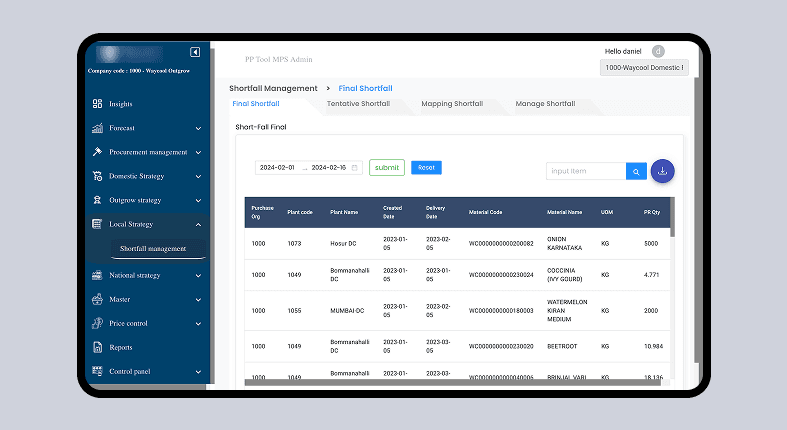
Problem & Current Design Issues
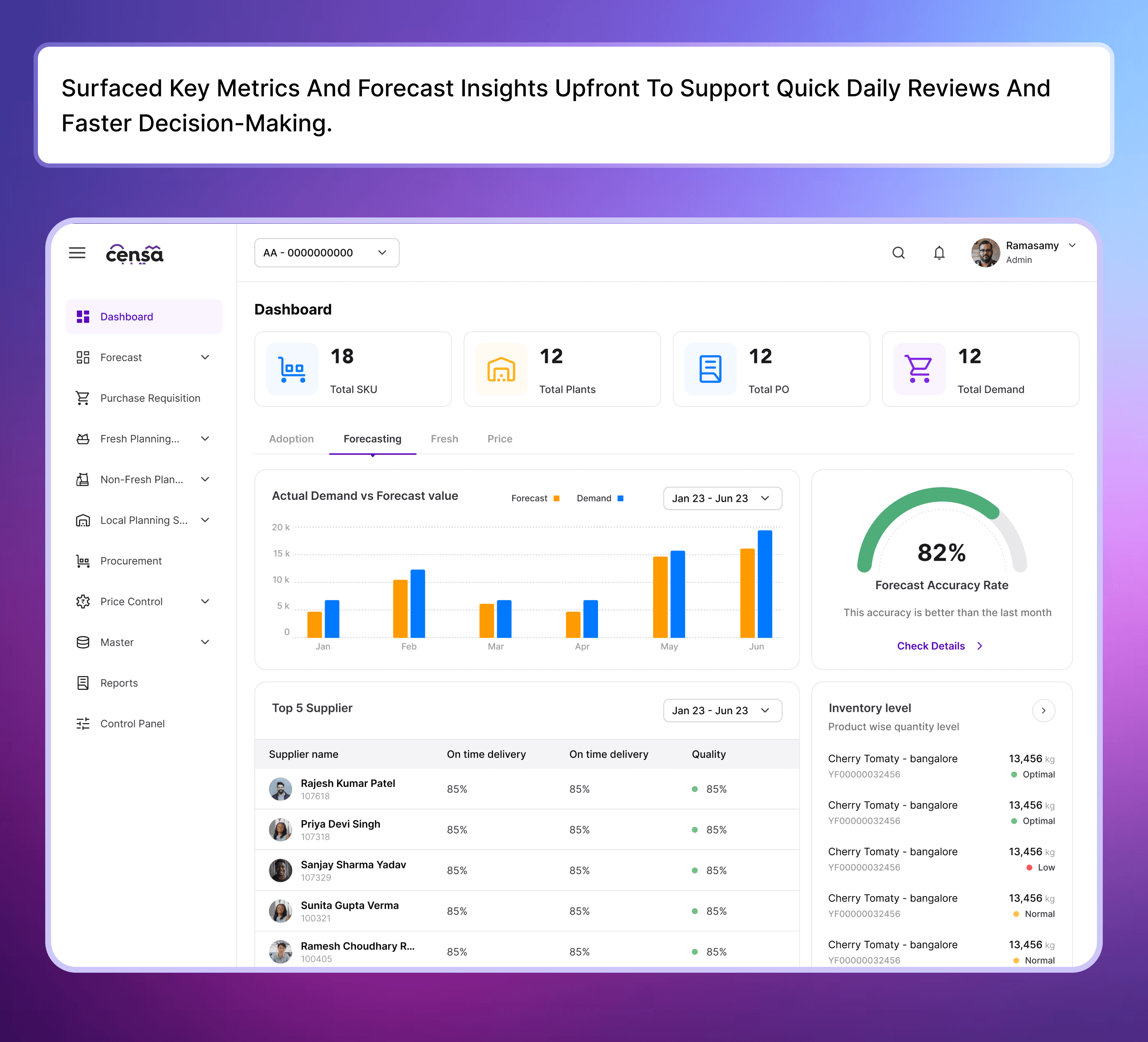
Months of incremental updates had left the product inconsistent. Same workflow, different behavior, depending on which module you were in.
Similar flows looked and worked differently across modules
No clear next step after login
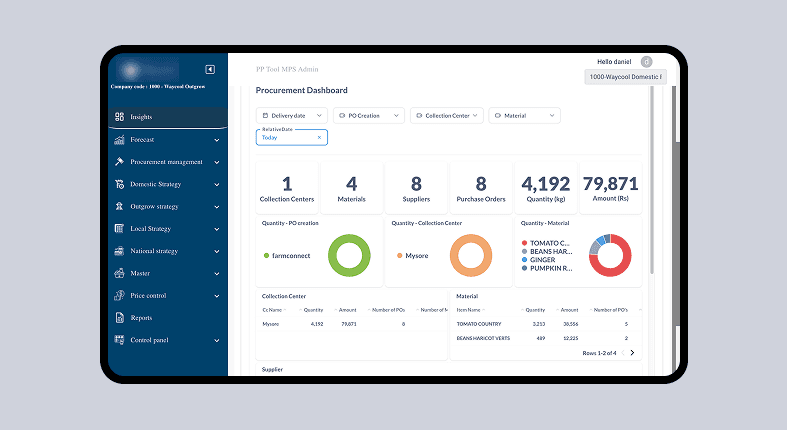
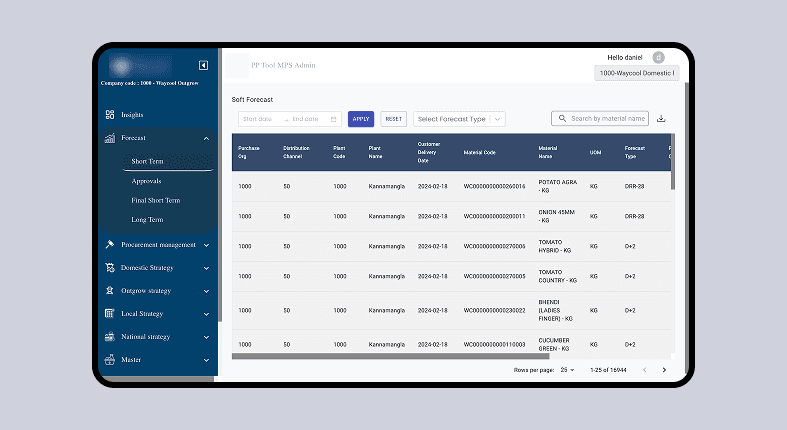
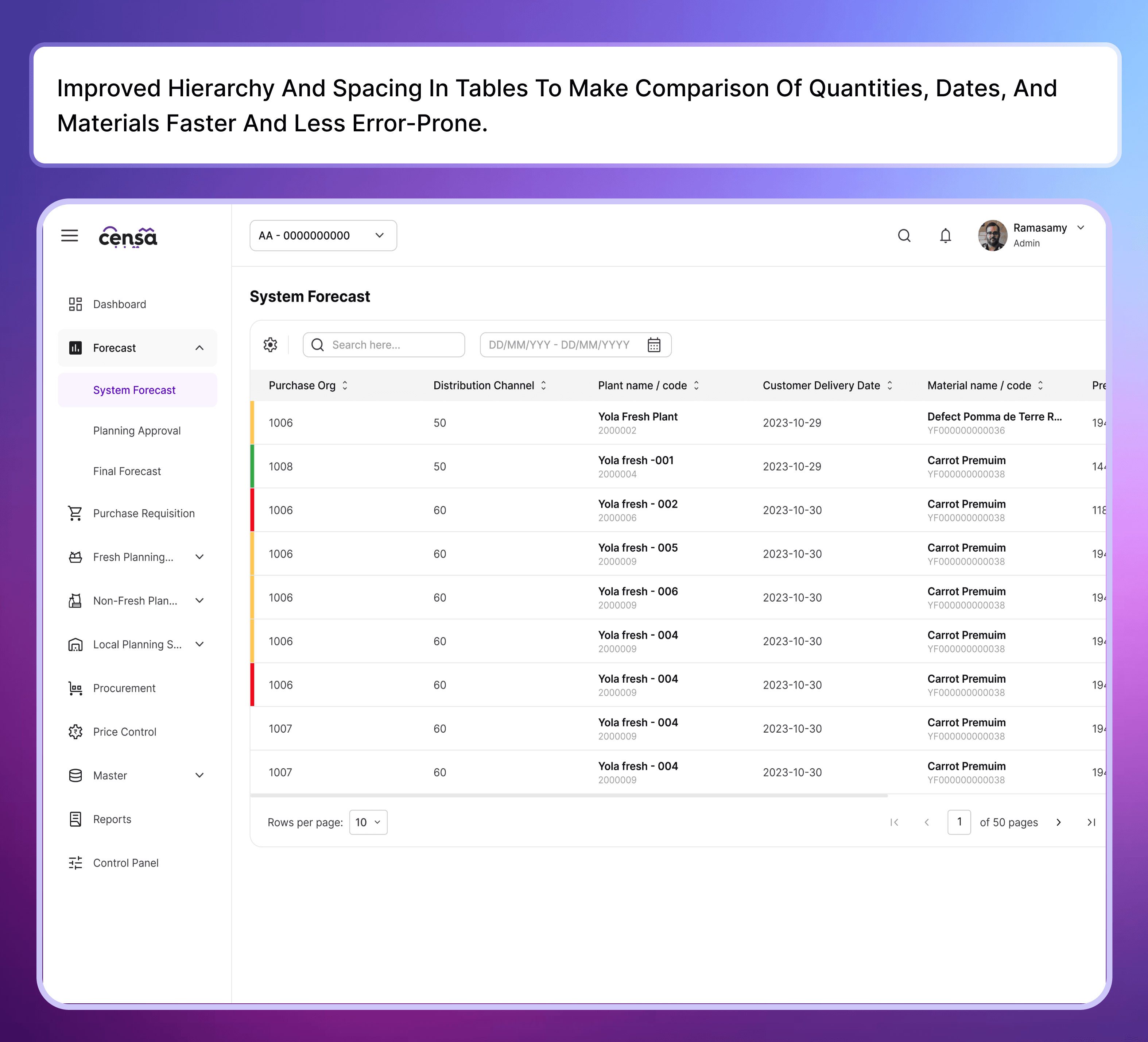
Dense data views with no hierarchy — hard to scan, slow to act on
Dashboards showed everything, prioritized nothing
Procurement flows leaned on manual coordination outside the tool
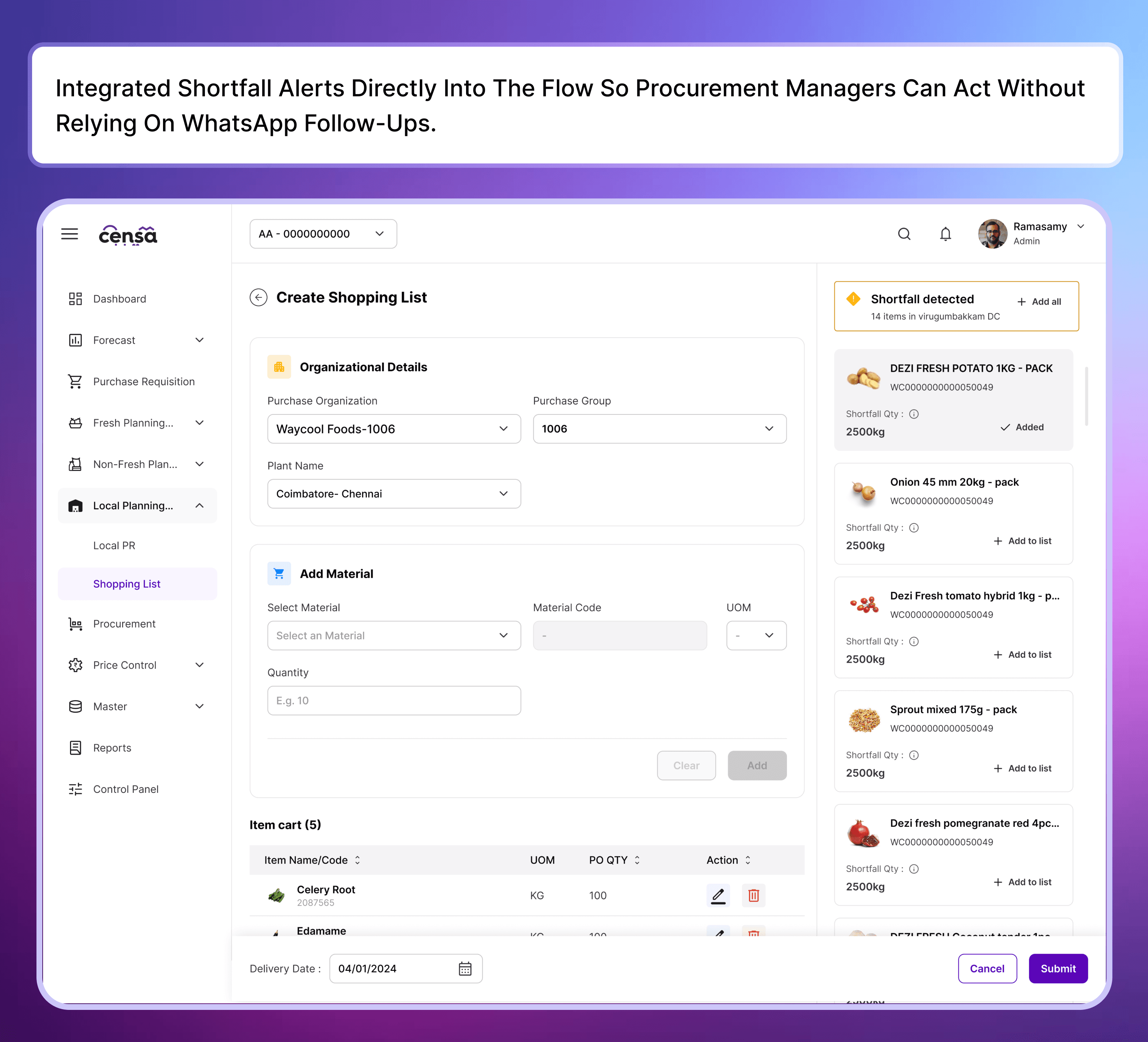
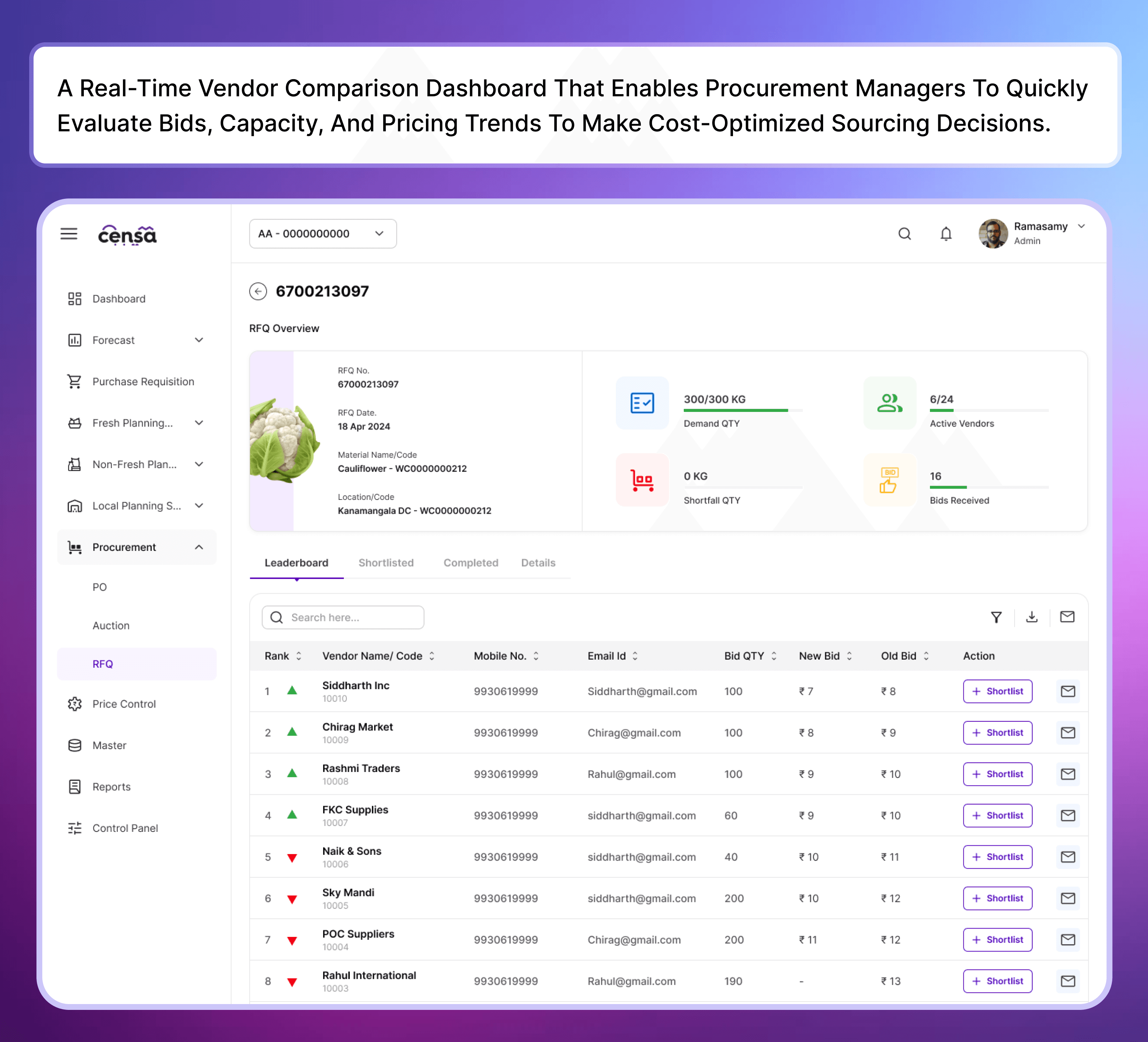
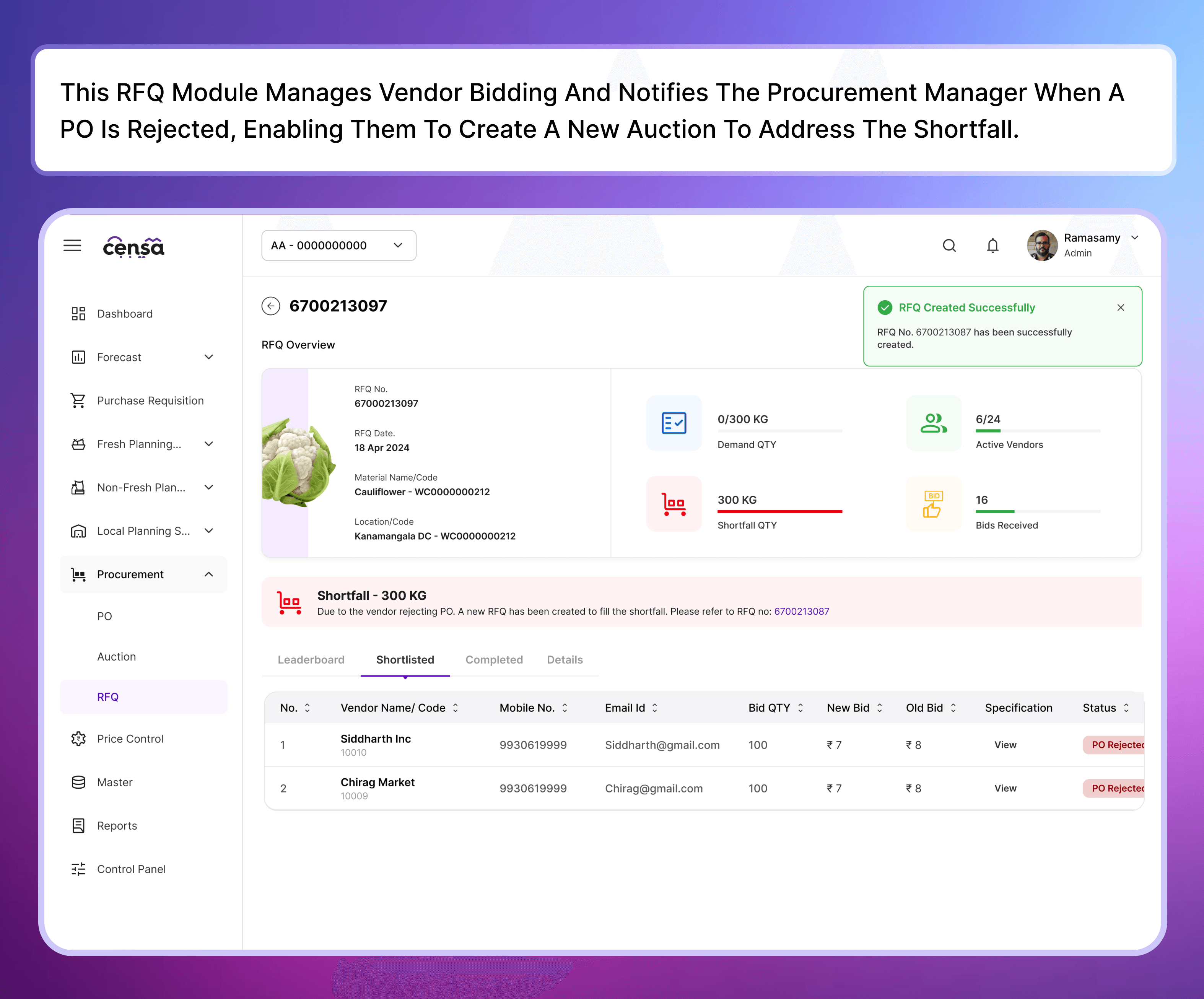
Shortfall tracking was split across screens, so nothing got resolved fast
The system couldn't scale without a rework
Problem & Current Design Issues
Months of incremental updates had left the product inconsistent. Same workflow, different behavior, depending on which module you were in.
Similar flows looked and worked differently across modules
No clear next step after login
Dense data views with no hierarchy — hard to scan, slow to act on
Dashboards showed everything, prioritized nothing
Procurement flows leaned on manual coordination outside the tool
Shortfall tracking was split across screens, so nothing got resolved fast
The system couldn't scale without a rework
Research & Understanding
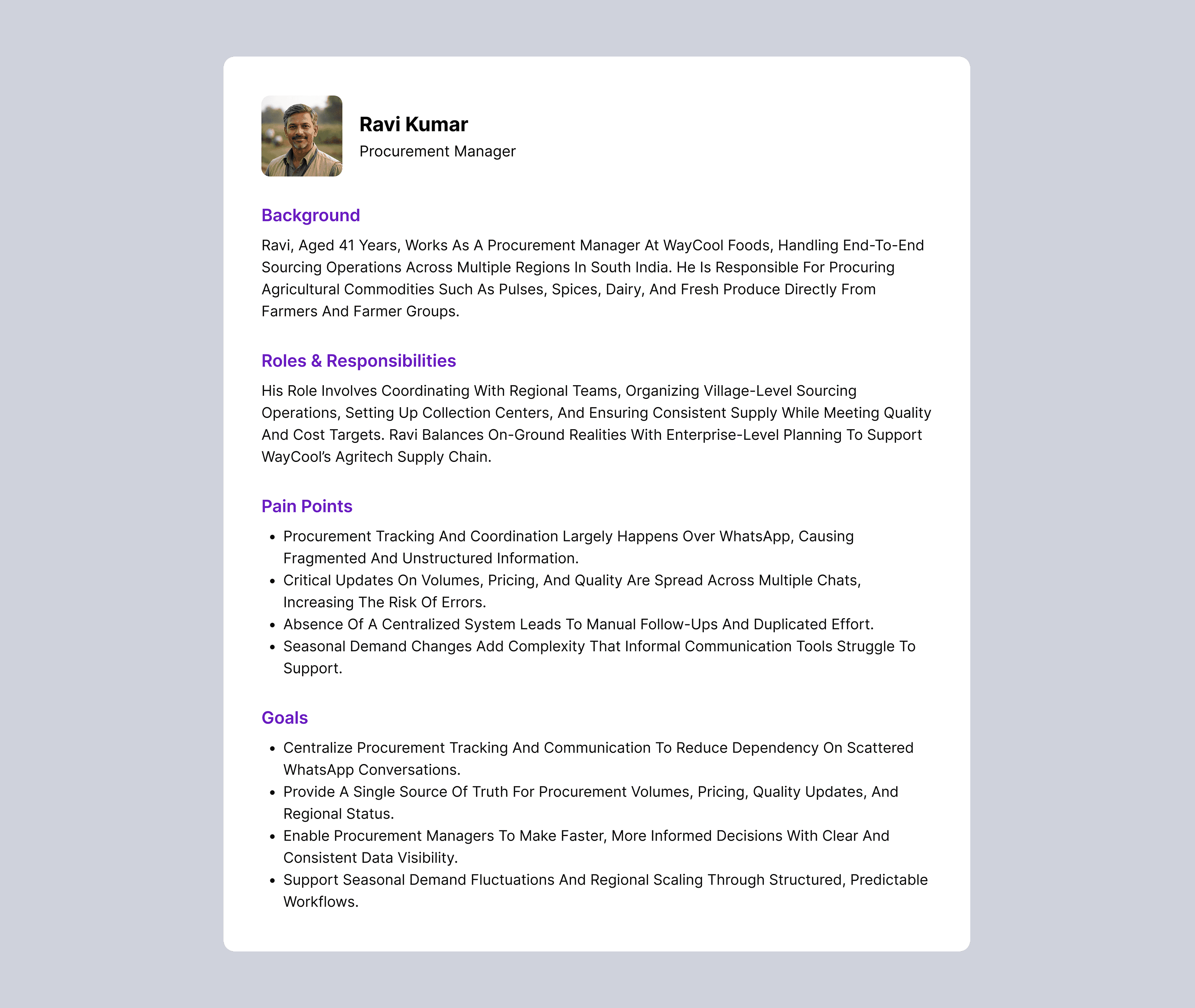
I got on calls with procurement managers to see how they actually worked, not how the flowcharts said they worked. That's where the WhatsApp habit came from — the tool didn't support urgent, cross-team problems, so people solved them the fastest way they had.
That one finding shaped the redesign more than anything else.
Research & Understanding
I got on calls with procurement managers to see how they actually worked, not how the flowcharts said they worked. That's where the WhatsApp habit came from — the tool didn't support urgent, cross-team problems, so people solved them the fastest way they had.
That one finding shaped the redesign more than anything else.
Information Architecture
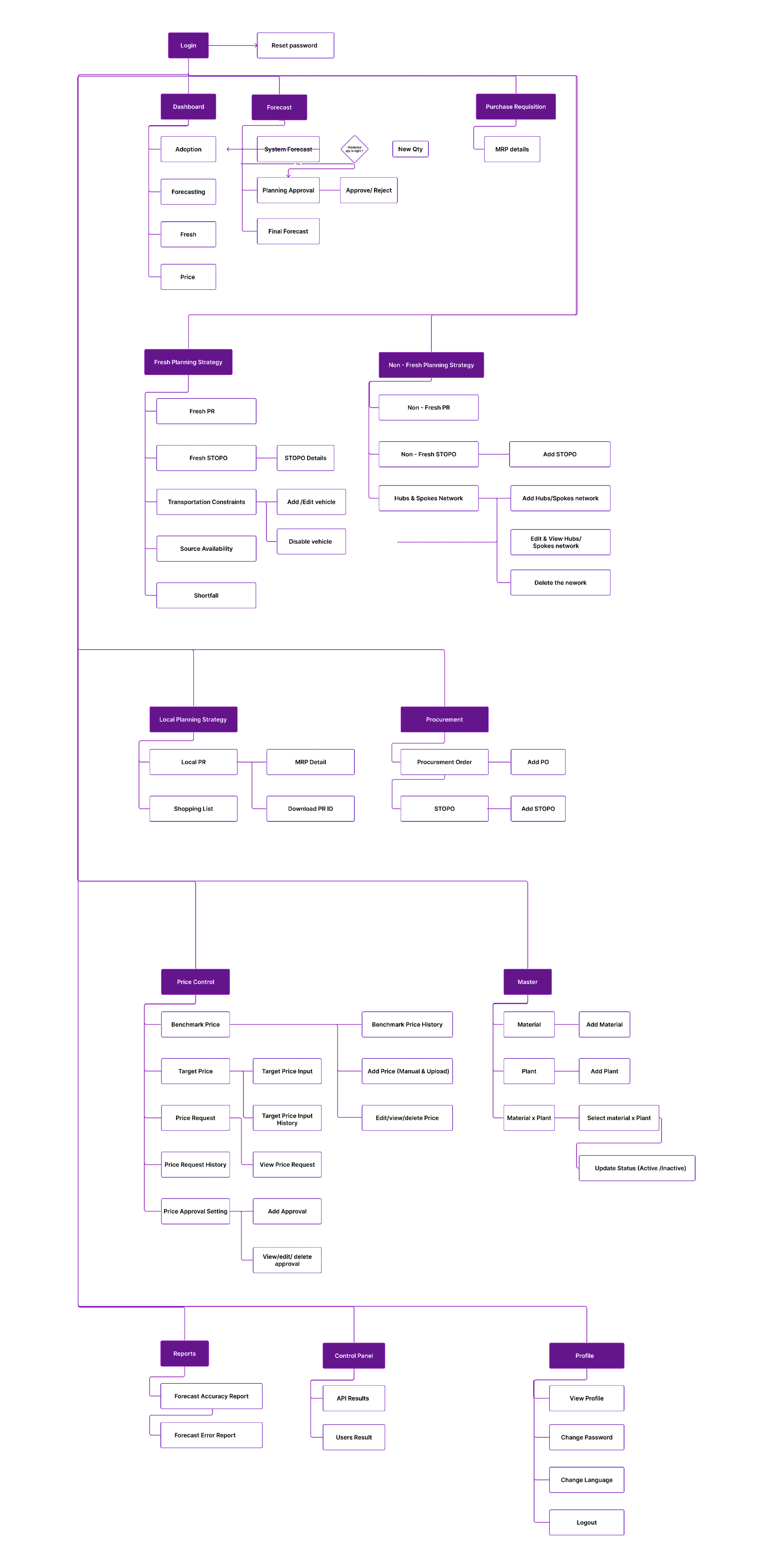
I rebuilt the IA around how procurement actually happens, not how the org chart is structured. Fewer paths to the same task, consistent structure across modules.
Information Architecture
I rebuilt the IA around how procurement actually happens, not how the org chart is structured. Fewer paths to the same task, consistent structure across modules.
Design Goals
Four goals drove every decision:
Centralize what was happening over WhatsApp
Make flows behave the same way everywhere
Make dense views scannable, so decisions take seconds, not minutes
Build patterns that scale across regions without a redesign each time
Design Goals
Four goals drove every decision:
Centralize what was happening over WhatsApp
Make flows behave the same way everywhere
Make dense views scannable, so decisions take seconds, not minutes
Build patterns that scale across regions without a redesign each time
Scale & Execution
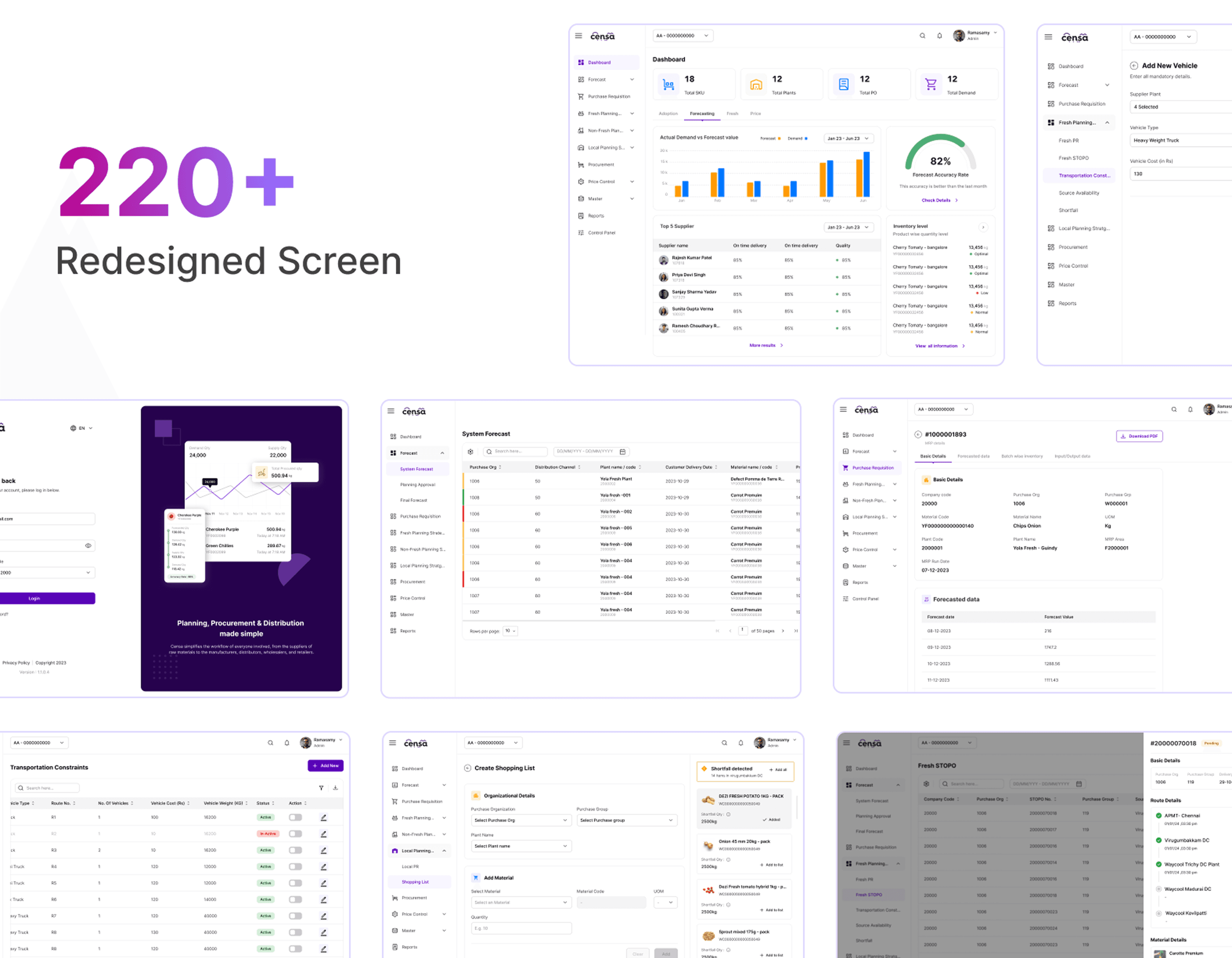
220+ screens, redesigned solo, on one set of reusable components and layout rules. That's what made the scale possible — I wasn't drawing 220 screens, I was applying one system 220 times.
Scale & Execution
220+ screens, redesigned solo, on one set of reusable components and layout rules. That's what made the scale possible — I wasn't drawing 220 screens, I was applying one system 220 times.
Redesigned Screens
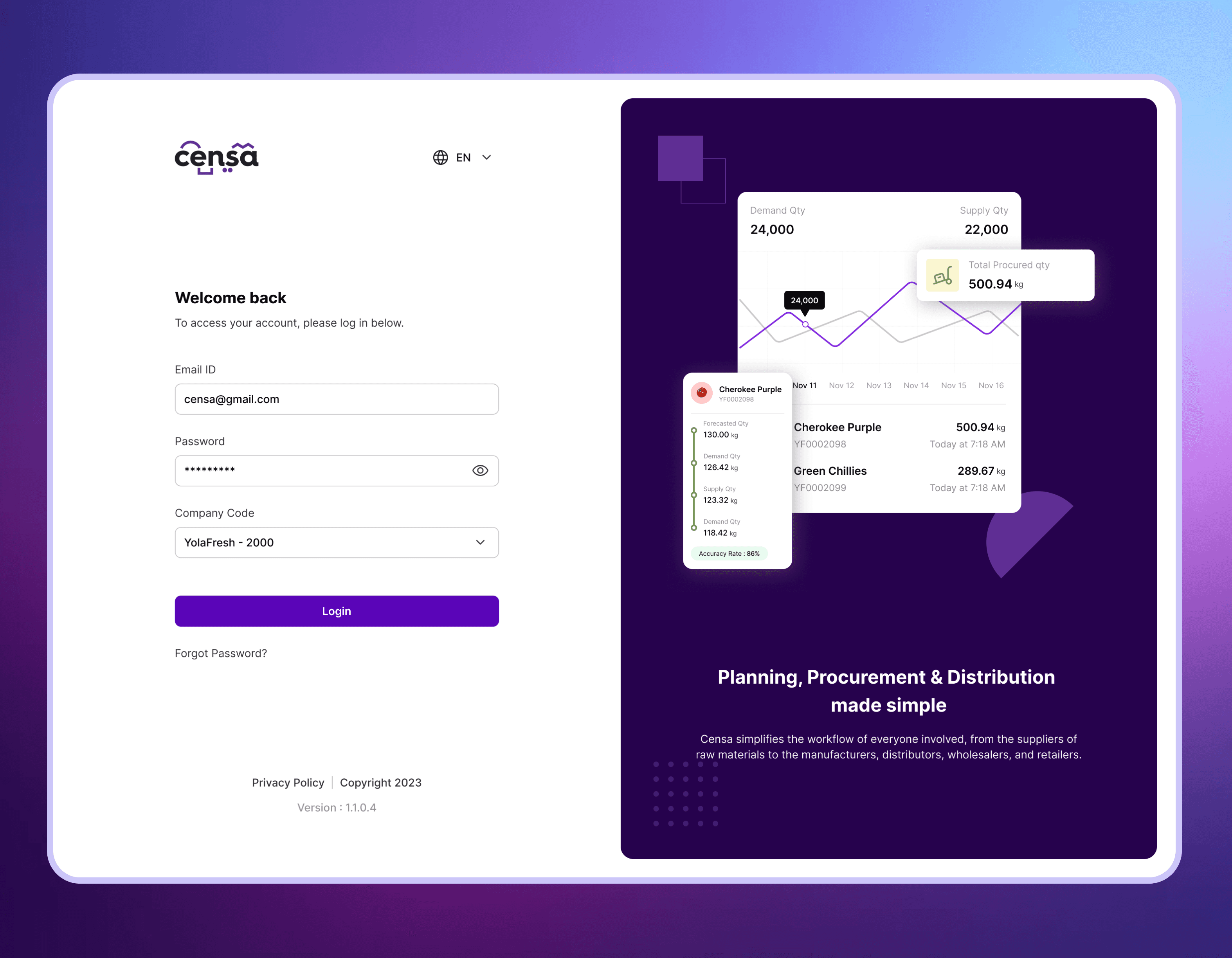
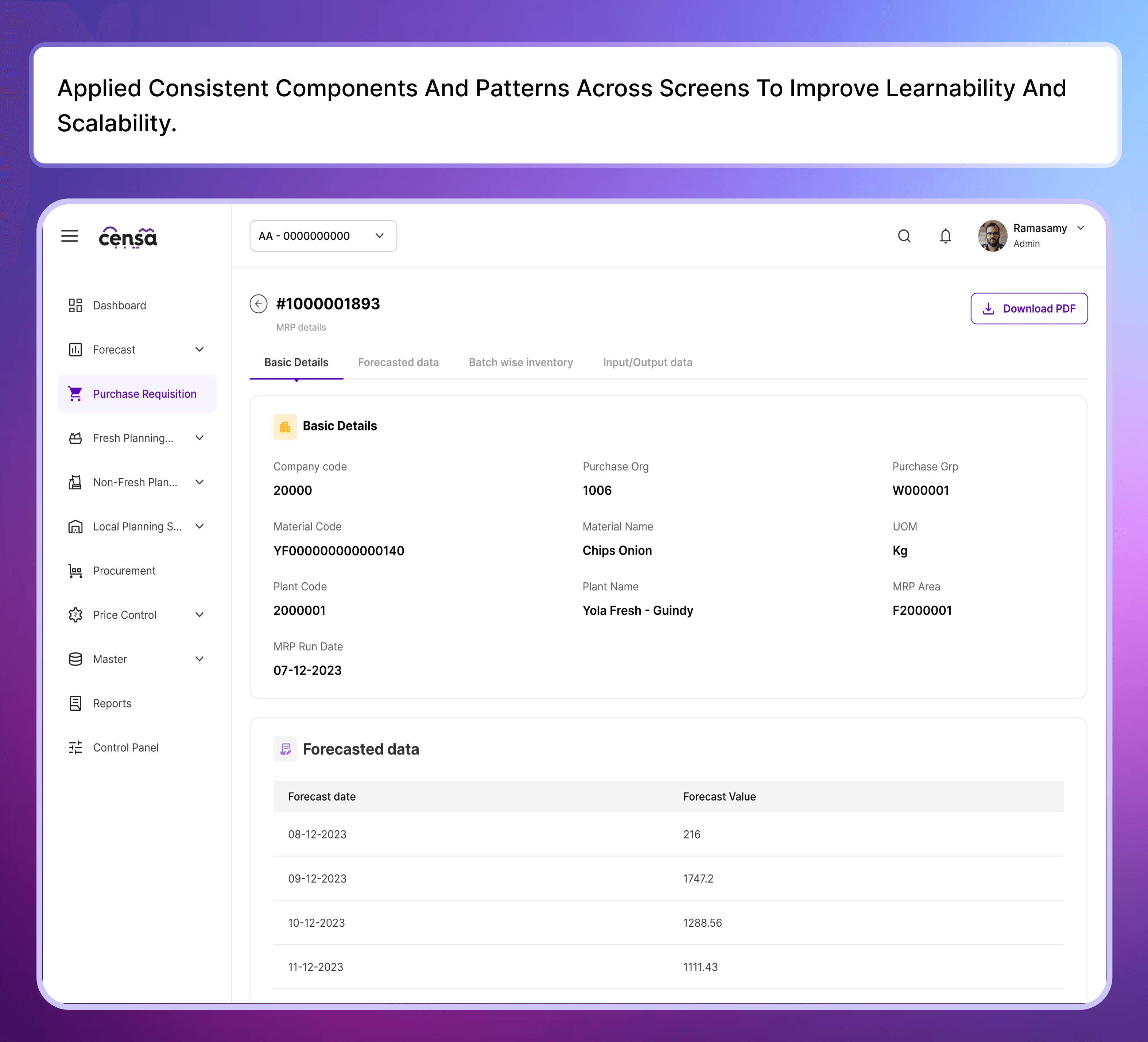
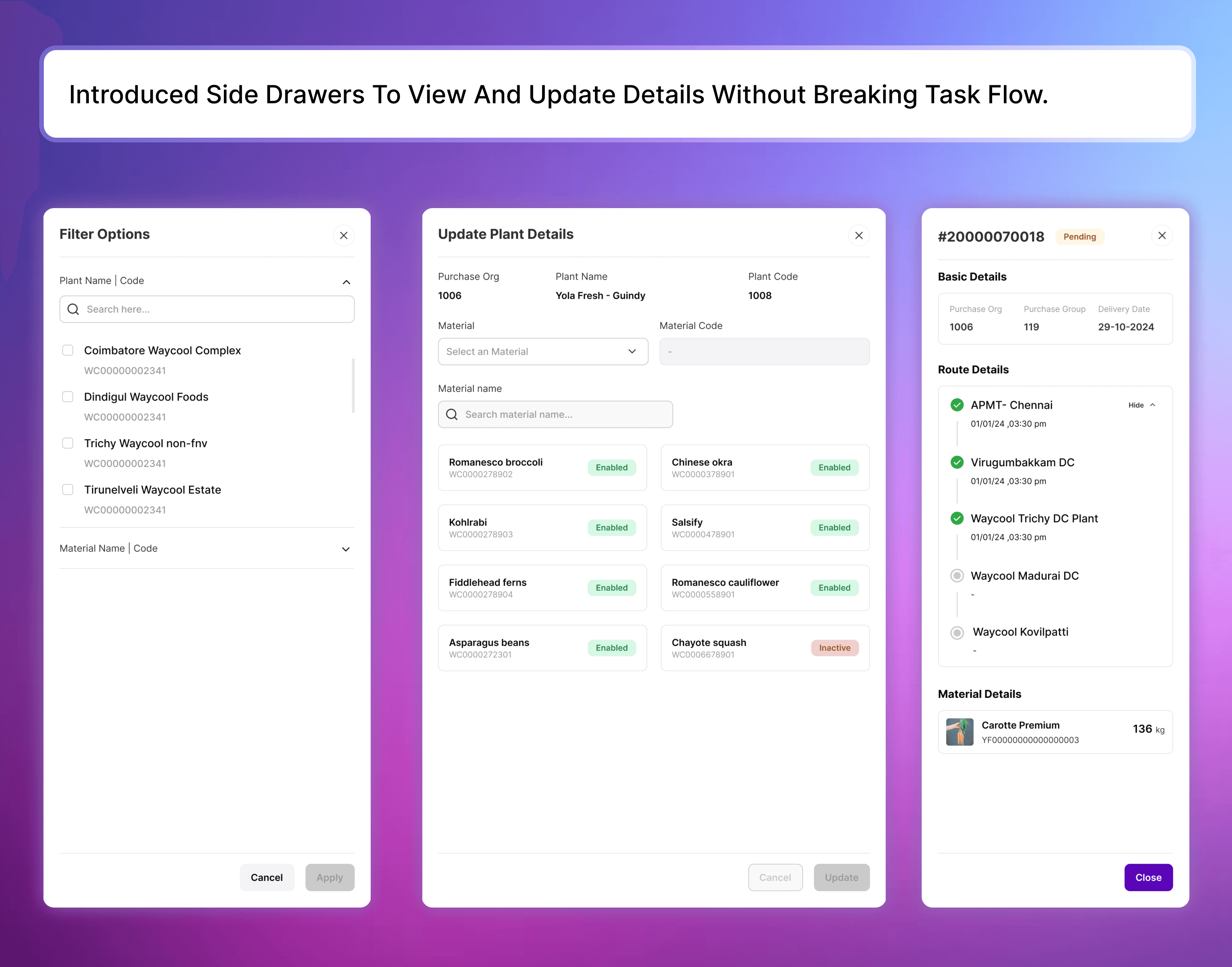
Every screen follows the same design system. Same patterns, same logic, regardless of which module you're in. That consistency is what killed the training dependency — once you'd learned one flow, you'd learned the shape of all of them.
Redesigned Screens
Every screen follows the same design system. Same patterns, same logic, regardless of which module you're in. That consistency is what killed the training dependency — once you'd learned one flow, you'd learned the shape of all of them.
Outcome & Impact
Procurement tracking moved out of WhatsApp and into the system it was supposed to live in
Same workflow, same behavior, in every module — no more relearning the product screen to screen
Dense views got real hierarchy, so managers could scan and act faster
220+ screens running on one system, built to extend without starting over each time
Outcome & Impact
Procurement tracking moved out of WhatsApp and into the system it was supposed to live in
Same workflow, same behavior, in every module — no more relearning the product screen to screen
Dense views got real hierarchy, so managers could scan and act faster
220+ screens running on one system, built to extend without starting over each time
More Works
More Works
Discuss about work or just WANT TO SAY HI?
LET'S CHAT